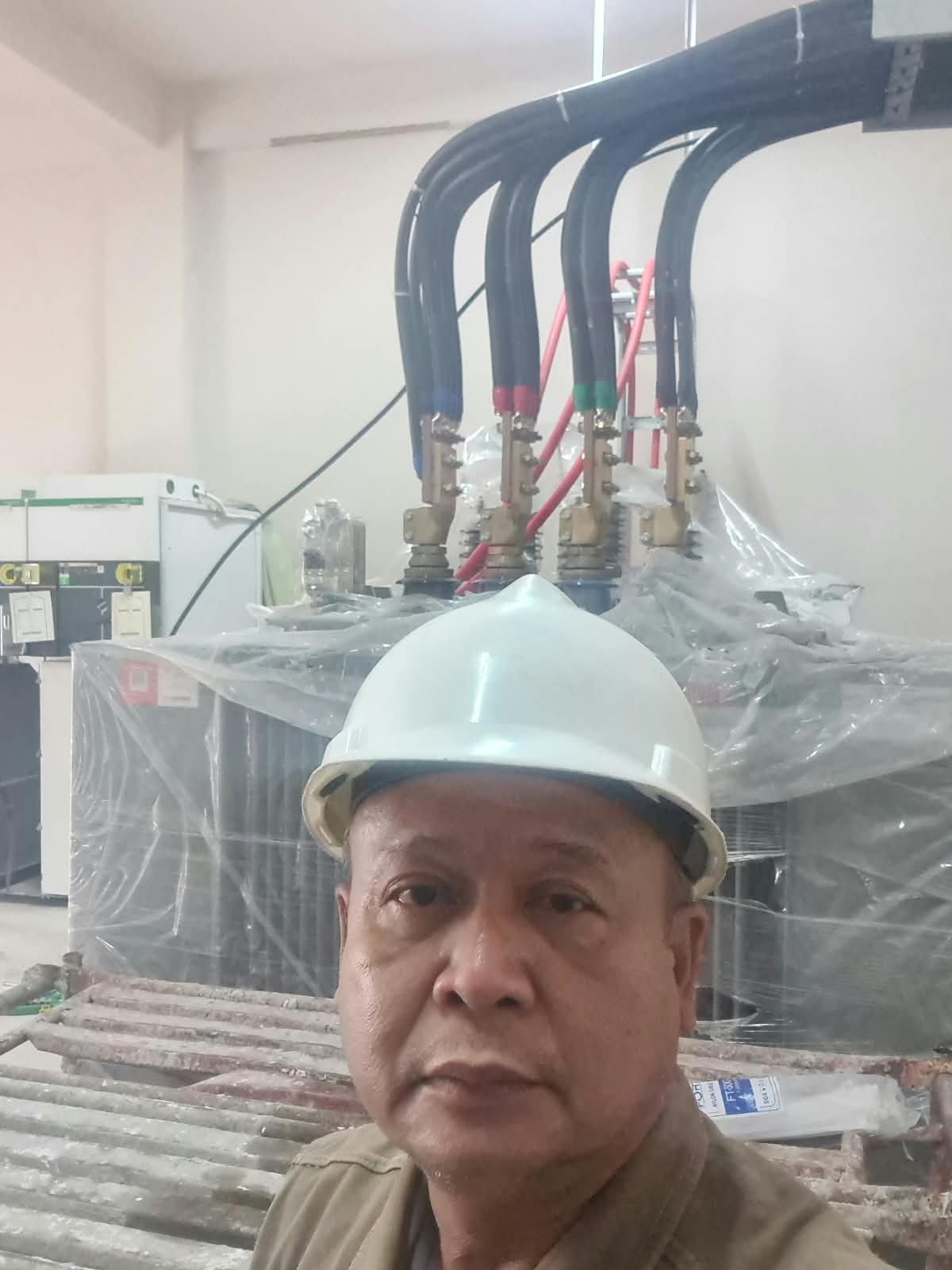
Connecting an industrial facility or palm oil mill to Indonesia’s 20 kV PLN grid requires 5 mandatory stages: 1) Load demand sizing and Single Line Diagram (SLD) approval with PLN UP3, 2) Turnkey substation and MV line construction by a licensed contractor holding SKK Level 5 engineers, 3) Digital NIDI registration via the Ministry of Energy and Mineral Resources (ESDM), 4) Physical and electrical testing by an accredited Technical Inspection Agency (LIT), and 5) Issuance of the statutory Certificate of Operational Worthiness (SLO) prior to permanent grid energization.
Calculating Industrial Power Demand for Palm Oil Mills
A modern palm oil mill processing 30 to 60 tons of fresh fruit bunches (FFB) per hour typically demands connected electrical capacity ranging from 1,000 kVA to 2,500 kVA. Engineering teams must rigorously calculate the starting currents of heavy inductive equipment, including cage tippers, continuous sterilizers, screw presses, digesters, and boiler feedwater pumps.
Over-sizing the distribution transformer incurs unnecessary capital expenditure and minimum monthly PLN billing charges (rekening minimum), whereas under-sizing causes voltage dips and nuisance tripping during peak processing runs.
Single Line Diagram (SLD) Approvals & Substation Construction
The second stage requires preparing an engineered Single Line Diagram (SLD) endorsed by the regional PLN UP3 planning department. The SLD specifies Overcurrent (OCR) and Ground Fault (GFR) protection curves, Current Transformer (CT) ratios, Vacuum Circuit Breaker ratings, and 20 kV XLPE cable specs.
Physical construction involves concrete foundation casting, erection of 20 kV modular switchgear cubicles (Incoming, Outgoing, Metering), step-down distribution transformers, and main low-voltage switchboards (LVMDP) built to IEC 61439 standards.
Digital NIDI Registration & Statutory ESDM SLO Certification
Under Indonesian Ministry of Energy (ESDM) Decree No. 12/2021, PLN is prohibited from energizing industrial systems that lack official NIDI and SLO certificates. NIDI is registered digitally on the government portal by an accredited contractor with SKK Level 5 engineers.
Accredited Technical Inspection Agencies (LIT) then perform witness commissioning tests: 5 kV Megger insulation resistance, transformer oil breakdown voltage, earth grounding impedance (<5 Ohm), and relay trip timing. Once verified, the official SLO is issued for permanent commercial grid energization.
Frequently Asked Questions
How long does a 20 kV industrial PLN grid connection take from start to energization?
For 1,000 to 2,500 kVA industrial loads, the technical and permitting process typically requires 4 to 8 weeks when substation construction and equipment procurement run in parallel.
Does BRT manage all NIDI and SLO permitting documentation?
Yes, we provide full turnkey delivery: from Single Line Diagram drafting to NIDI registration and accredited LIT on-site commissioning witness testing.
Gatot Baskoro Adi
With over 18 years of medium-voltage electrical engineering leadership since 2008, Gatot Baskoro Adi holds three SKK Level 5 licenses issued by PT Andalan Profesi Elektrikal Indonesia under the Ministry of Energy and Mineral Resources. He has directed more than 23 major industrial projects and 8 completed installations for Malaysian conglomerate KLK Group across Sumatra and Kalimantan.